Septic System Installation in Lycoming County (Sand Mounds & Conventional)

Perc tests, Act 537 permits, sand mounds, conventional systems, and camp replacements — one local crew that handles the whole process.

Call (570) 555-0134
Free on-site estimates · same-day callbacks
Free On-Site Estimates
Act 537 Permits Handled
Sand Mound & Conventional
Serving All of Lycoming County

Get a Straight Answer on Your Project

Tell us what you're planning — a cleared lot, a dry basement, a new driveway, a septic replacement — and we'll walk the site, explain your options, and put a real number on it. Call (570) 555-0134.

  • Same-day callback on every request
  • Itemized estimates — no mystery line items
  • We handle 811, permits, and erosion controls

One Crew From Perc Test to Final Inspection

Williamsport Excavation installs sand mound and conventional septic systems across Lycoming County, and we handle the entire process — the perc test, the Act 537 paperwork, the excavation, the system itself, and the final inspection with the Sewage Enforcement Officer. You make one phone call; we manage the rest.

That matters more here than most places. Lycoming County is Pennsylvania's largest county by land area — 1,229 square miles of ridge-and-valley terrain — and the same shale geology that shapes the hillsides decides what kind of septic system your lot can legally have. A contractor who doesn't know these soils quotes a conventional system your ground can't support, and the surprise lands after the perc test. We start with the soil, so the number you get is the number you build.

Why So Many Lycoming County Lots Fail the Perc Test

Most failed perc tests here trace back to shallow shale. Much of the county's upland soil is USDA-mapped Weikert and Berks channery silt loam — thin, stony soil weathered straight out of shale bedrock — and on the Weikert series, bedrock can sit less than 20 inches below the surface, on slopes that run 25 to 70 percent.

A perc test measures how fast water soaks into the ground, but the deeper question is soil depth. A septic absorption area needs enough usable soil above the limiting zone — bedrock or the seasonal high water table — to filter and treat wastewater before it reaches groundwater. When rock sits 18 inches down, that depth simply isn't there, no matter how carefully the test is run. The site "fails" not because septic is impossible, but because a conventional in-ground system is.

Valley-floor lots can fail in the other direction: soils that hold water, and seasonal water tables that rise close to the surface in a county that catches more than 40 inches of precipitation a year. Either way, the fix is usually the same engineered answer — a sand mound.

Sand Mound vs. Conventional: The Soil Decides

You don't choose a sand mound — your soil test does. Pennsylvania prescribes elevated sand mounds where a lot has shallow bedrock, a high water table, or slow-percolating soil: the same three conditions the EPA cites in its mound-system guidance.

A conventional system is simple. A tank settles the solids, and gravity feeds the liquid into perforated pipe laid in stone-bedded trenches, where the native soil finishes the treatment. It's the cheaper system for one reason: the ground is doing most of the work for free.

A sand mound builds the soil the site is missing. Specified sand is trucked in and shaped into an elevated bed above natural grade; a pump chamber doses wastewater up into the mound in controlled, pressurized cycles; and the sand plus the undisturbed soil beneath it provide the treatment depth nature didn't. It isn't a luxury upgrade or a contractor preference — it's the engineered answer to 18 inches of soil over shale.
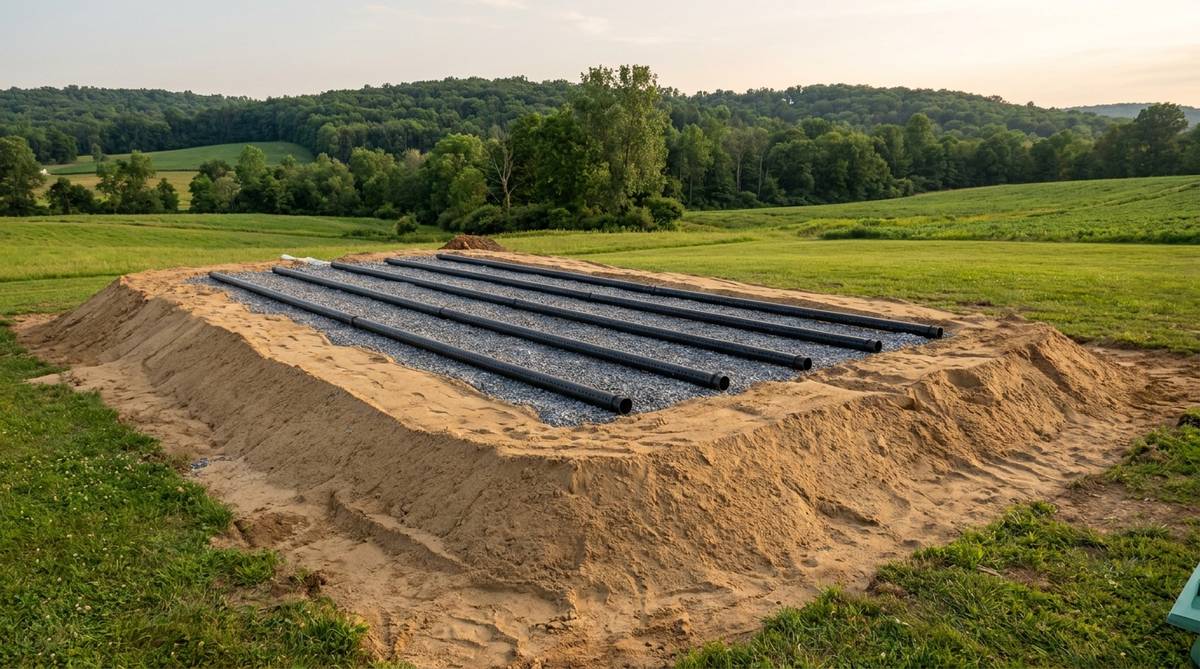
A sand mound septic system under construction, with a shaped tan sand bed and black perforated lateral pipes in gravel before topsoil cover
A sand mound mid-build: laterals bedded in gravel across the shaped sand bed, before the topsoil cap goes on.

What a mound adds over a conventional system:

The Act 537 Process, Step by Step

Every new or replacement septic system in Pennsylvania runs through Act 537 — the state's Sewage Facilities Act, on the books since 1966 — and the local Sewage Enforcement Officer (SEO) signs off at every stage. Here's the sequence, and who does what:

We dig the pits, schedule the SEO, and keep the paperwork moving, so the process reads as one project to you instead of five appointments you have to chase.

What a Septic System Honestly Costs

In published national ranges, a conventional septic system runs about $3,600–$12,500 installed, and a sand mound runs about $10,000–$20,000 — often double a conventional system. Those are published industry ranges, not quotes; the real number comes out of your soil test, your slope, and your access.

The mound premium isn't padding. You're paying for sand delivered by the truckload, a pump chamber and dosing components a gravity system doesn't have, and more machine hours shaping the bed. On rocky sites, shale can add published costs of $200–$1,200 or more for rock handling. Our septic and sand mound cost guide breaks the whole thing down line by line — including why two quotes on the same lot can be thousands apart.

Camp & Cabin Septic Replacements

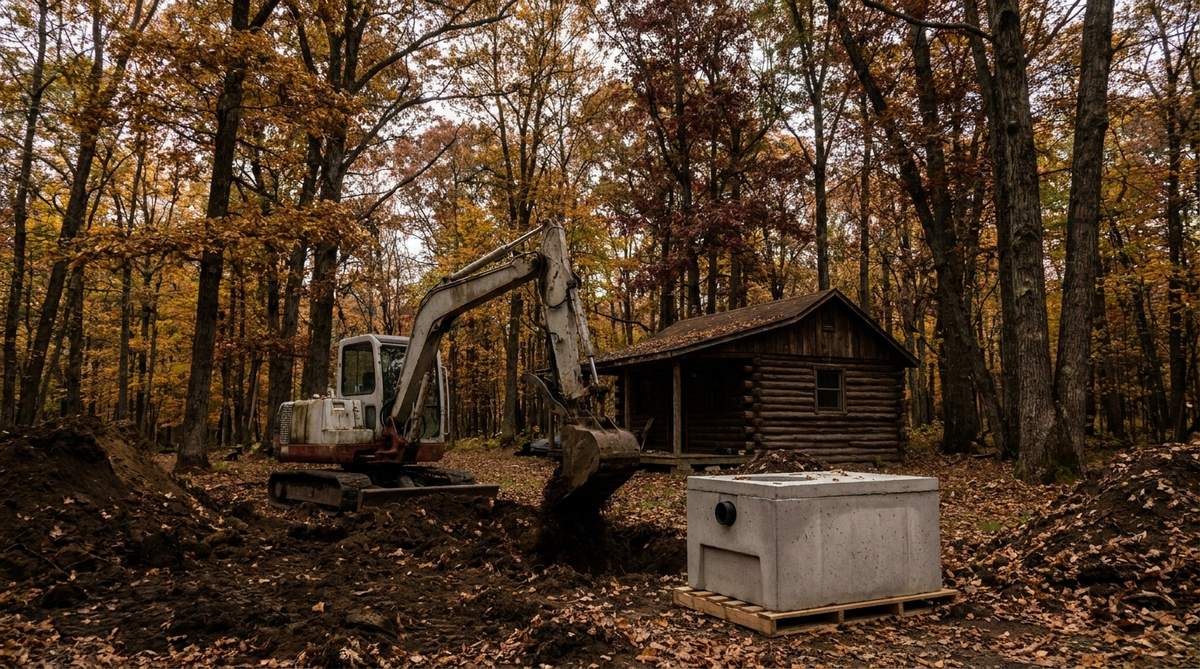
If you own a camp up the Lycoming Creek corridor or in the county's northern tier, yes — we come to you. Camp and cabin septic replacements around Trout Run and the surrounding townships are a regular part of our schedule, not a favor.

A lot of camp systems predate modern permitting entirely, and a failing one still runs through the same Act 537 process as a year-round home. For low-use camps on ground that won't perc, a holding tank is often the practical answer: it stores wastewater rather than treating it, gets pumped on a schedule matched to how often you're actually there, and keeps a weekend place legal without building a treatment system the soil can't support. We also cut and stabilize access so the pump truck can reach the tank in every season.

An excavator working beside a small rustic hunting cabin in the northern-tier woods with a new concrete septic tank staged nearby
Camp and cabin septic replacements are routine work up the northern tier — tank staged, machine in, done.

Can a Septic System Be Installed in Winter?

Often, yes — winter installation is a judgment call, not an automatic no. Frost season here runs roughly mid-October to early May, and the answer depends on your site, not the calendar.

Frozen ground slows excavation, snow cover hides grade, and placing and shaping mound sand in hard freeze can compromise the bed. Some sites — good access, workable soil, a mild stretch — go ahead just fine. For the rest, the smart play is to run the testing and permitting through the winter so you're first on the spring dig list instead of joining the line in April. Either way, you'll get a straight answer, not a scheduling stall.

Buying Land Without a Perc Test

Buying an untested lot is a gamble, and the stake is the value of the land. The same acreage might support a conventional system, might require a $10,000–$20,000 sand mound, or might not perc at all — leaving a holding tank as the only legal option.

The protection is simple: make your offer contingent on a satisfactory perc test, and get the site evaluated before you close. We test lots for buyers all the time — it's a small cost against a five-figure question, and it turns a guess into a plan. If you're eyeing a piece of ground anywhere in Lycoming County, get in touch before you sign.

Tell Us What You're Planning

Clearing, grading, septic, drainage, or demolition — call now and get a real answer today, not a voicemail you never hear back from.

(570) 555-0134

Septic Questions Homeowners Actually Ask Us

Sand mound vs regular septic — why can't I have normal?

Because the soil decides, not the contractor. Pennsylvania prescribes an elevated sand mound when a site has shallow bedrock, a high water table, or soil that percs too slowly — the same conditions the EPA cites in its mound-system guidance. On the Weikert shale soils that cover much of upland Lycoming County, bedrock can sit less than 20 inches down, which leaves too little soil to treat wastewater in a conventional trench.

$11,500–$18,000 quotes — normal?

For a sand mound, yes. Published national ranges for mound systems run about $10,000–$20,000 installed — often double a conventional system — because the sand is trucked in, the system needs a pump and pressurized dosing, and there's simply more material and machine time in the job. Get itemized quotes so you can compare line by line — our cost guide shows what belongs on them.

What if my land fails the perc test?

A failed perc test isn't always the end. Options include testing a different area of the lot, a deeper look at the soil profile, or an alternative design such as a sand mound — that's exactly the situation mounds exist for. If no part of the lot will support any absorption system, a holding tank is the fallback. We coordinate retesting with the Sewage Enforcement Officer.

Buying property with no perc test — gamble?

Yes — a real one. An untested lot might support a conventional system, might need a $10,000–$20,000 sand mound, or might fail entirely and be limited to a holding tank. Make your offer contingent on a satisfactory perc test; the cost of testing is small compared to what a bad answer does to the value of the land.

Can a septic system be installed in winter?

Often, yes — with judgment. Frost season here runs roughly mid-October to early May, and frozen ground, snow cover, and cold-weather sand placement can complicate a mound install. Some sites can go ahead; others are smarter to stage — testing and permits through the winter, dirt work when conditions allow. Call (570) 555-0134 and we'll tell you honestly which one yours is.

Tap to Call — (570) 555-0134