Basement & Foundation Excavation in Williamsport, PA

Full basements, footer trenches, and frost walls cut to plan elevations — below frost, on schedule, and ready for the crew that follows us.

Call (570) 555-0134
Free on-site estimates · same-day callbacks
Free On-Site Estimates
Residential & Commercial
PA One Call (811) Compliant
Serving All of Lycoming County

Get a Straight Answer on Your Project

Tell us what you're planning — a cleared lot, a dry basement, a new driveway, a septic replacement — and we'll walk the site, explain your options, and put a real number on it. Call (570) 555-0134.

  • Same-day callback on every request
  • Itemized estimates — no mystery line items
  • We handle 811, permits, and erosion controls

New-Home Basements & Footer Trenches

We excavate full basements and footer trenches for new homes across Williamsport and Lycoming County, cut to the elevations on your foundation plan and to the frost depth your municipality requires. Design frost depths published for our region by the Pennsylvania Housing Research Center run roughly 24 to 48 inches — confirm your site's number with the local code official — because footings that stop above frost heave, and heaved footings crack the foundation they carry.

A basement dig is more than a hole. We strip and stockpile the topsoil so it's there for finish grading later, cut the excavation oversize so the footer and wall crews have room to form and waterproof, park the spoil where the backfill machine can actually reach it, and leave the bottom clean, level, and at grade. On this county's wet calendar — 40-plus inches of precipitation a year, with a freeze season running from about mid-October to early May — we also plan the dig around water, because an open excavation that ponds is a delay for every trade behind us.
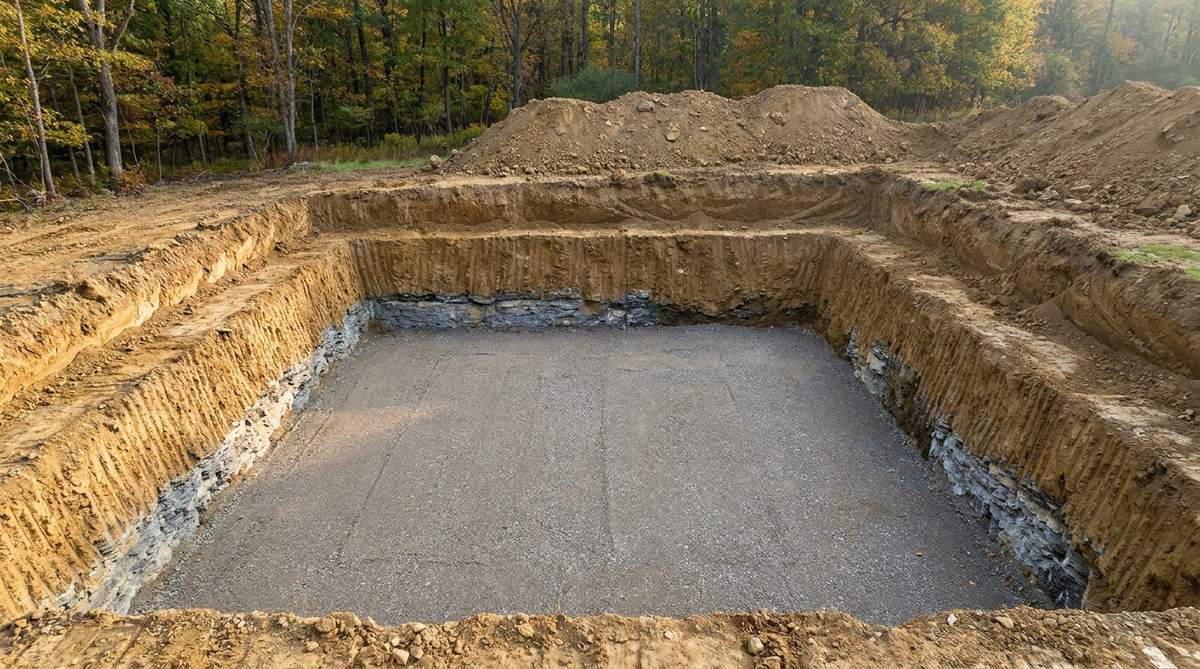
A clean rectangular basement excavation with benched earth walls, a layer of gray shale near the bottom, and a level compacted gravel base
A basement dig with benched walls and a level gravel base. The gray band near the bottom is the shale that decides how a dig goes.

What a foundation dig from us includes, itemized on every estimate:

Additions & Frost Walls

Additions live by the same rule as houses — footings below frost — just in tighter quarters. We trench and excavate for room additions, attached garages, sunrooms, and porches, including the frost walls that carry them.

A frost wall is a short foundation wall on a footing set below frost depth — the standard way to put a garage or addition on solid bearing without digging a full basement. The craft in addition work is digging hard against an existing foundation without undermining it, and knowing where the existing utilities run before the bucket finds them. When water, sewer, or electric lines have to move to make room, we handle that in the same mobilization — see utility trenching.

For Builders & General Contractors

If you build houses, here's the pitch in one sentence: we show up on the dig date, cut to your plan elevations, and leave a hole your footer crew can work the same week. We answer the phone, calls get returned the same day, and if a date can't hold we tell you before it costs you — not on dig morning.

We also stay with the job past the dig: back for backfill after waterproofing and inspection, then rough and finish grading once the framing traffic clears — see grading & site preparation. One excavator across the whole build means one number to call when the schedule moves. Send a set of plans through our contact page and you'll have a number back fast.

The Shale Reality on Hillside Lots

On Lycoming County hillside lots, plan for rock — don't get surprised by it. The USDA maps much of our sloped ground as Weikert series soils, where shale bedrock sits less than 20 inches below the surface, on slopes mapped from 25 to as much as 70 percent.

For an eight-foot basement, that means ledge on these lots isn't a risk — it's close to a certainty, and a bid that ignores it is a change order waiting to happen. We read the site, open test holes where the soil maps are ambiguous, and put rock handling in the estimate in writing: how the shale gets ripped or hammered, how it's billed if quantities run past the plan — published ranges show rock adding $200–$1,200 or more — and where the broken rock goes, which is often into backfill or a driveway base instead of a truck. On the right lot, we'll also tell you when a walk-out basement design works with the hillside instead of paying to fight it.

Tight-Access Excavation

A backyard addition with a fence on one side and nine feet between houses is still a diggable job — it just takes the right machine instead of the biggest one. We run compact excavators for tight-access basement, addition, and footer work, plan the spoil path before we start, and protect the driveway, lawn, and everything else that's staying. Smaller machines mean more hours, and the estimate says so up front instead of hiding it.

Tell Us What You're Planning

Clearing, grading, septic, drainage, or demolition — call now and get a real answer today, not a voicemail you never hear back from.

(570) 555-0134

Foundation Excavation Questions, Answered

Do footings need to be below the frost line?

Yes. Footings that stop above frost depth sit in soil that freezes, expands, and lifts — and a footing that moves cracks the foundation above it. Design frost depths published for our region by the Pennsylvania Housing Research Center run roughly 24 to 48 inches; the number that governs your project comes from the local code official, and we dig to it.

What if the excavator hits rock?

On Lycoming County hillsides we usually assume it will: on the Weikert soils that cover much of our sloped ground, shale bedrock can sit less than 20 inches down. We assess ledge risk during the site visit, write rock handling into the estimate — published ranges show rock adding $200–$1,200 or more — and rip or hammer the shale as the job requires. What you won't get is a surprise change order for ground we should have seen coming.

Do I have to call 811 before digging?

Yes — Pennsylvania's One Call law (Act 50) requires notifying 811 before excavation, with a 3–10 business day window for utilities to mark their lines. When we dig your foundation, that filing is our responsibility, not yours: we place the request and wait for the marks before any bucket touches the ground.

Why are excavation quotes so far apart?

Because contractors assume different things. On foundation work the big swings are rock handling (included, excluded, or a vague "extra"), haul-off versus spoil kept on site, over-dig and backfill scope, and whether rough grading is in the number. Published national ranges run $100–$250 per hour for machine and operator, with typical residential excavation projects at roughly $1,700–$6,700. Our estimates itemize every piece so you can compare bids line by line — the cheapest number on the page isn't cheap if the rock clause is missing.

Tap to Call — (570) 555-0134