Why Williamsport Properties Need a Local Excavator
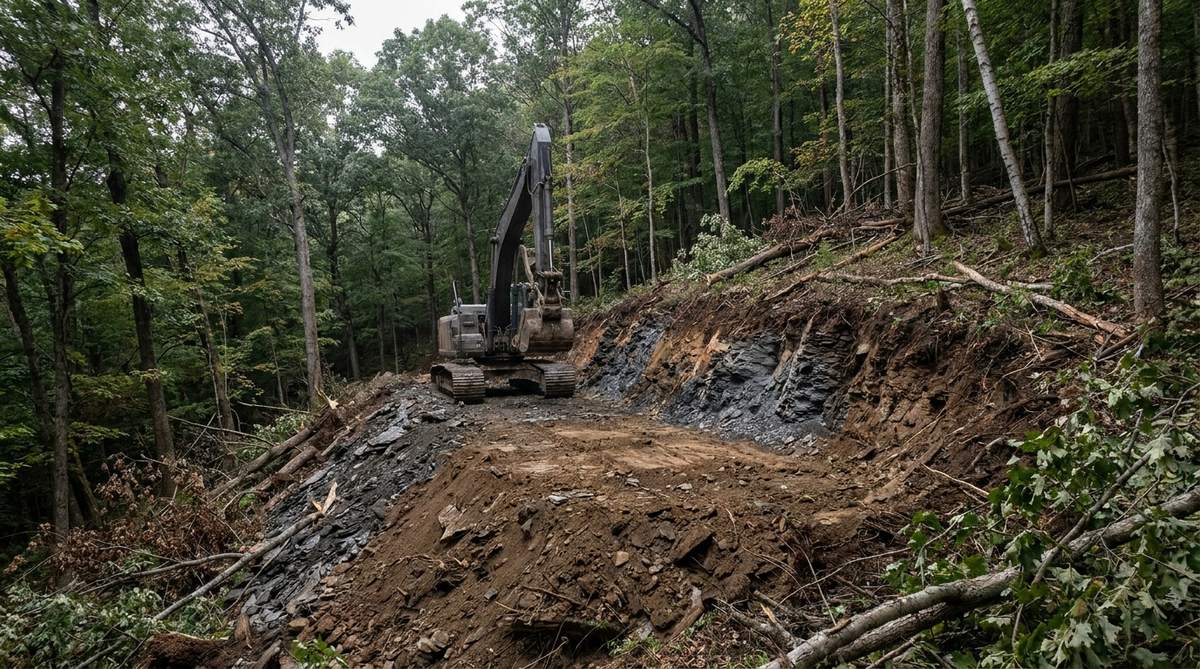
Digging in Lycoming County is not like digging anywhere else. The county is the largest in Pennsylvania by land area — nearly 1,229 square miles of ridge-and-valley terrain where the West Branch of the Susquehanna cuts along the foot of Bald Eagle Mountain. Most of the upland soil here is what the USDA classifies as channery silt loam — Weikert and Berks series soils weathered straight out of shale. On the Weikert soils that cover our hillsides, bedrock can sit less than 20 inches below the surface. An out-of-area contractor quotes your job like it's soft loam, hits ledge on day one, and suddenly the price isn't the price.
We plan for this ground because we work it every week: shallow shale on the slopes, heavier wet soils on the valley floors, and slopes that run 25% or steeper on wooded lots. It changes how a driveway gets crowned, how deep a footer trench really needs to go, why your perc test failed, and what it takes to keep a cleared hillside from washing into the neighbor's yard the first time Lycoming Creek country gets one of its storms.
Water is the other half of every job here. Williamsport averages over 40 inches of precipitation a year, and this valley's history is written in floods:
- The levee protects the city — not your yard. The Army Corps levee (finished 1955) held back Agnes in 1972 by about a foot. But it guards the river, not the water falling on your lot.
- The creeks are the real story. The 1996 flood ran higher on Lycoming Creek than Agnes had, and the 2011 storm set the record on Loyalsock Creek. If your property drains toward a creek, grading and drainage are not cosmetic.
- Freeze-thaw works against you. Design frost depths in our region run roughly 24 to 48 inches. Water lines, footers, and driveways built shallow heave, crack, and fail.
What Excavation Work Costs Here
The short answer: published national ranges run $100–$250 per hour for an excavator with operator, and typical residential projects land between roughly $1,700 and $6,700. Land clearing runs about $500–$5,600 per acre depending on how heavily wooded it is. A conventional septic system nationally runs about $3,600–$12,500 installed, while the sand mound systems common on our shale soils typically run $10,000–$20,000. Those are published industry ranges, not quotes — every real number depends on your soil, slope, and access, which is why estimates here start with a site walk, not a phone guess.
What moves the number: rock (shale ledge adds hammer time), slope (machines work slower and erosion controls get mandatory), access (a tight backyard means smaller machines and more hours), disposal (grinding brush on site is cheaper than hauling it), and permits. If your project disturbs 5,000 square feet or more of earth, Pennsylvania requires a written erosion-and-sediment plan; disturb an acre or more and an NPDES permit comes into play. We build all of that into the estimate up front — it's the difference between a $3,500 quote and a $12,000 one covering the same work.
How We Work
Every project runs the same five steps: walk the site (we look at soil, slope, access, and water before pricing anything), itemized estimate (stumps, hauling, rock handling, and permits are line items, not surprises), PA One Call (we file the 811 request and wait the legal 3 business days for utility marks — our job, not yours), do the work (and leave the site graded, stable, and clean), and walk it again with you before we call it done.
Serving Williamsport and All of Lycoming County
Based in the Williamsport area, we work the whole county: South Williamsport and Duboistown across the river, Montoursville and Loyalsock Township to the east, Cogan Station and Trout Run up the Lycoming Creek corridor, Linden and Jersey Shore to the west, and Muncy, Hughesville, and Montgomery down-county. Camp and cabin owners in the northern tier: yes, we come to you — septic replacements, access lanes, and pad work at hunting camps are a regular part of the schedule.