Lot Clearing for New Builds
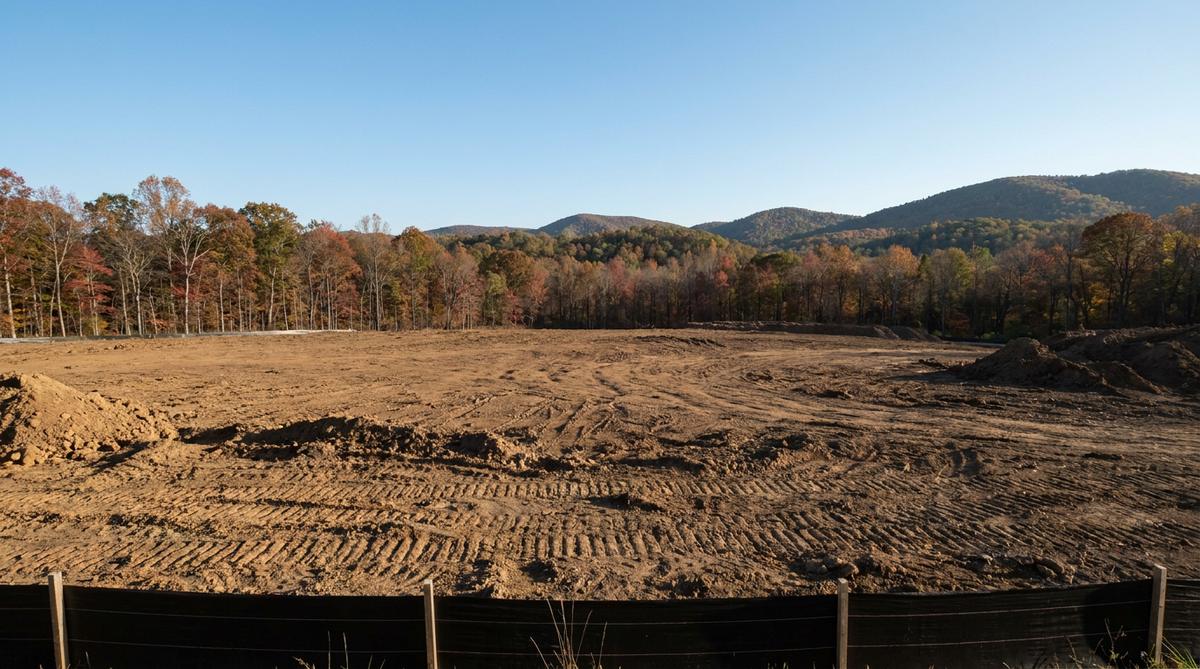
Clearing is the first real construction cost on a wooded Lycoming County lot — and the one most building budgets underestimate. We take the lot from standing woods to build-ready: trees felled and removed, brush cleared, stumps grubbed where the house, driveway, and septic will go, and the site rough-graded so it sheds water while it waits for your builder.
The ground here decides how that work goes. Most wooded lots around Williamsport sit on Weikert and Berks channery silt loams — thin, shaley soils where bedrock can be less than 20 inches down and wooded slopes commonly run 25% or steeper. Shallow ledge changes which machines we bring, how cleanly stumps come out, and how the pad gets cut. Once the lot is open, we shape the building pad too — see grading & site preparation.
Brush & Underbrush Removal
Not every clearing job is a building lot. A lot of our work is brush: field edges swallowed by ten years of growth, fence lines you can't walk anymore, camp lots in the northern tier that need to open up before hunting season, pasture gone to saplings. We cut it, clear it, and leave ground you can actually use.
For brush-only jobs where nothing is being built, forestry mulching is often the smarter tool — it grinds everything in place with no burn piles and no hauling. We'll tell you on the walk which approach fits your land and your budget.
Grubbing & Stump Removal — Does Clearing Include Stumps?
Not automatically. "Clearing" and "grubbing" are two different line items, and the gap between them is where most quote confusion starts. Clearing means the vegetation is down and gone, with stumps cut flush to the ground. Grubbing means the stumps and root balls come out and the holes get backfilled and compacted.
If you're building — a house, a garage, a driveway, a septic system — the area under construction needs to be grubbed. If you're opening a view or reclaiming pasture, flush-cut or ground stumps may be all you need, at a real savings. Our estimates state stump handling as its own line so you're never guessing.
Is There Timber Value in Your Trees?
Sometimes — but on most residential lots, honestly, no. A larger stand of mature hardwood on an Appalachian hillside can interest a timber buyer, and on the right property a timber sale offsets a meaningful share of the clearing cost. Scattered yard trees and second growth on a one-to-three-acre building lot rarely carry enough merchantable volume to bring a logger out.
We'll tell you which case yours is during the free site walk. If your trees are worth a call to a timber buyer, you'll hear it from us before we price the job — not after the wood is gone.
What Affects the Per-Acre Price
Published national ranges put land clearing at $500–$5,600 per acre, and where your lot lands in that band comes down to five things. Those are published planning figures, not quotes — the real number takes a walk:
- Density. Light brush sits at the bottom of the range; dense mature woods at the top.
- Slope. Wooded hillsides here run 25% and steeper — machines work slower and erosion controls become mandatory.
- Access. A lot you can drive a truck onto costs less than one we have to cut a path into.
- Rock. Shale ledge under 20 inches of soil is common; published ranges add $200–$1,200+ when rock work enters.
- Disposal. What happens to the debris moves the number as much as the cutting does.
The full breakdown — per-acre bands by density, method comparisons, and the quote-variance explainer — is in our Pennsylvania land clearing cost guide.
Pile, Burn, Grind, or Haul — What Happens to the Debris
Debris handling is the quietest driver of a clearing price, so we make you choose it on purpose. Piling on site is cheapest — and stacked brush makes good wildlife cover on camp properties. Burning can work where the township allows it; burn rules differ from municipality to municipality, so we confirm before anyone assumes. Grinding turns the debris into mulch that stays on the land. Hauling off is the cleanest finish and the biggest line item, because trucking and disposal ride on top of the machine time.
Why Fall and Winter Beat Spring for Clearing
The best time to clear land here is when the ground is firm and the vegetation is dormant — roughly mid-October through early May. Firm or frozen ground carries heavy machines without rutting, which protects the topsoil you'll want later for lawn or pasture. With the leaves down, we can see the lot's true shape, and dormant brush doesn't fight back with a summer of regrowth.
There's a scheduling payoff too: Williamsport averages more than 40 inches of precipitation a year, and a lot cleared in fall or winter has settled and stabilized before the spring rains test it. Clear in the off-season and your builder starts on day one of the spring build window instead of waiting on us.
The 5,000-Square-Foot Rule: Erosion & Sediment Plans
Disturb 5,000 square feet or more of earth in Pennsylvania — barely an eighth of an acre — and Chapter 102 requires a written erosion-and-sediment control plan. Disturb an acre or more and an NPDES permit comes into play, administered through the county conservation district. Almost every real clearing job crosses the first threshold, and plenty cross the second.
We build the E&S plan, controls, and any permit costs into the estimate up front, and we file the PA One Call (811) request before any ground is opened — that's our job, not yours. Ready for a number? Call (570) 435-7565 or send the details through our contact page and we'll walk the lot this week.