Published cost ranges, why sand mounds run double, and the perc-test-to-permit path — the numbers before anyone asks for your signature.
Call (570) 555-0134Tell us what you're planning — a cleared lot, a dry basement, a new driveway, a septic replacement — and we'll walk the site, explain your options, and put a real number on it. Call (570) 555-0134.
In published national ranges, a conventional septic system runs about $3,600–$12,500 installed, while an elevated sand mound — the system many Pennsylvania lots are required to use — runs about $10,000–$20,000, often double a conventional system. Your soil, not your budget, usually decides which one you're building.
Last updated July 2026. Every figure on this page is a published national range, not a quote — real numbers come from a witnessed perc test and a site walk, and we'll gladly do both.
Two numbers set the frame: roughly $3,600–$12,500 for a conventional system and $10,000–$20,000 for a sand mound, in published national ranges. The table below adds the line items that move a real quote inside — or past — those bands.
| System / cost item | Published national range | What drives it |
|---|---|---|
| Conventional septic system (gravity trenches) | $3,600–$12,500 installed | Tank size, trench length, soil, access |
| Sand mound system (elevated) | $10,000–$20,000 installed — often double conventional | Trucked-in sand, pump & dosing equipment, engineered design |
| Rock / shale excavation | Adds $200–$1,200+ | Depth of ledge, hammer time |
| Excavator with operator | $100–$250 per hour | Machine size, site access, ground conditions |
Notice what's not on the list: brand names and sales packages. Septic cost is mostly dirt, stone, sand, concrete, pipe, and machine hours — which is why an itemized quote tells you more than any total ever will.
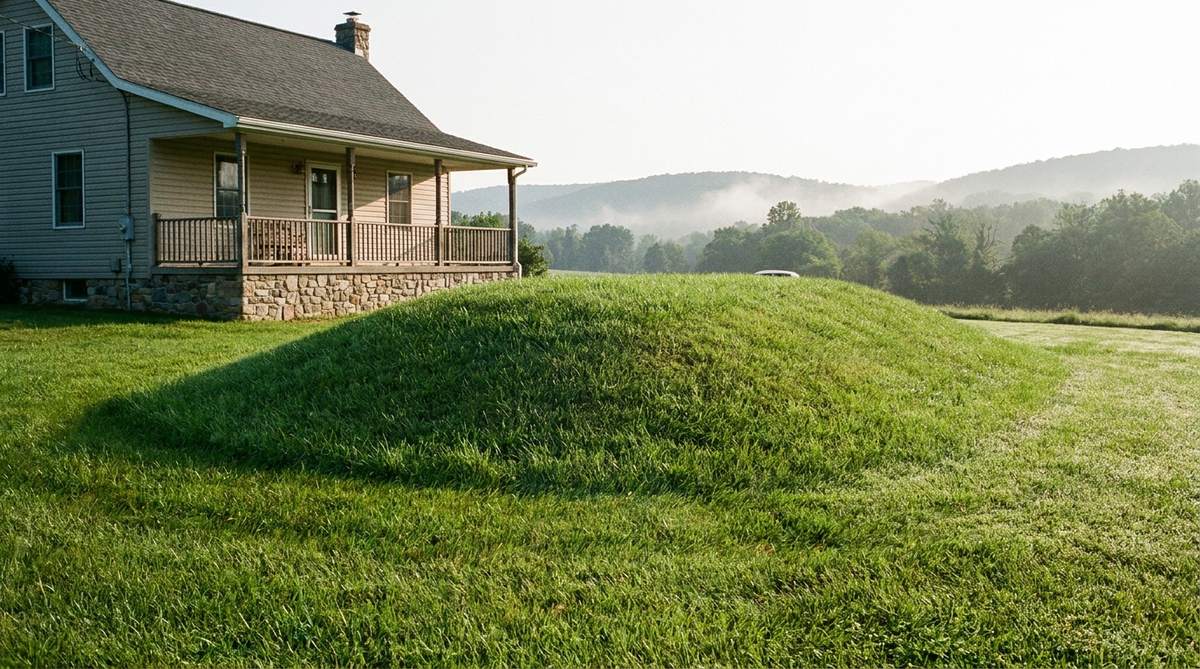
A sand mound costs more because you're buying two things: a wastewater system, and the treatment soil your lot doesn't have. Everything that makes a mound a mound is an added line item over a gravity system.
This is why the $11,500–$18,000 quotes Pennsylvania landowners trade stories about are not somebody padding a bill — they sit inside the published $10,000–$20,000 national band for exactly the system their soil test prescribed. The EPA's overview of mound systems lays out the rationale: shallow soil depth, high groundwater, or shallow bedrock.
Before anyone can honestly price your system, Pennsylvania requires the site to be tested and permitted under Act 537, the state Sewage Facilities Act — and the local Sewage Enforcement Officer (SEO) controls every gate. The sequence:
The testing-and-permit phase is a small fraction of total cost, but it's the phase that determines the total cost. That's why we treat the soil test as the first line of the estimate, not an afterthought.
A failed perc test usually narrows your options — it rarely ends them. Before assuming the worst, there are three moves left on the board:
If every option fails, a holding tank keeps the property usable: it stores wastewater instead of treating it and gets pumped on a schedule. It's the fallback, not the goal — pumping is a recurring cost that rewards low-use properties and punishes full-time households.
For a weekend camp on ground that won't perc, a holding tank is often the cheapest legal answer — you skip the absorption system entirely and pay for storage plus pumping instead.
The economics hinge on use. A hunting camp occupied a few weekends a season fills a tank slowly, so pump-outs are rare and the running cost stays small. Move in full-time and the same tank becomes a monthly bill. That's the honest fork in the road we walk camp owners through in the northern tier: replace the failed system with a mound and never think about it again, or hold and pump because you're only there in buck season. Either way the work runs through the same Act 537 permit path — details on the septic installation page.
Locally, the big cost variables are rock, slope, and access. Much of the county's upland soil is USDA-mapped Weikert and Berks channery silt loam over shale — on Weikert soils, bedrock can sit less than 20 inches down, and slopes run 25 to 70 percent.
Shallow ledge means rock handling (published adder: $200–$1,200+), steep ground means slower machine work and mandatory erosion controls, and a tight camp lane means smaller equipment and more hours at the published $100–$250 hourly range. None of that should be a surprise on install day — it should all be line items on the estimate you signed. When you're ready for a real number instead of a range, request a site walk or call (570) 555-0134.
Clearing, grading, septic, drainage, or demolition — call now and get a real answer today, not a voicemail you never hear back from.
(570) 555-0134Your soil, not your budget, makes that call. Pennsylvania prescribes elevated sand mounds where a lot has shallow bedrock, a high water table, or slow-percolating soil — the exact conditions the EPA describes in its mound-system guidance, and the exact conditions common on Lycoming County's shale uplands, where bedrock can sit less than 20 inches down. The cost consequence: the system type is decided before anyone talks price.
Yes — those numbers sit inside the published national range for sand mound systems, roughly $10,000–$20,000 installed. What matters is what's behind each number: sand quantity, pump and dosing equipment, permit and testing costs, rock handling, and restoration. Ask every bidder for an itemized quote so you're comparing the same job, not just the same total.
You have retest options before you're stuck: test a different area of the lot, re-evaluate the soil profile at depth, or move to an alternative design such as a sand mound — failing a conventional perc is exactly what mounds were engineered for. A holding tank is the last resort if nothing on the lot will support an absorption area. Testing costs are small next to the system itself, so it's worth exhausting the options.
It's a five-figure gamble. The difference between a lot that percs conventional and one that needs a mound is often $6,000–$10,000 or more within the published ranges, and a lot that won't perc at all may be limited to a holding tank. Write a perc-test contingency into the offer and test before you close — it's the cheapest insurance in the whole transaction.
Often yes, and winter timing rarely changes the price much by itself — frozen ground and snow mostly affect scheduling and workmanship risk, especially placing mound sand in a hard freeze. The money-smart winter move is to run your perc test, site evaluation, and Act 537 permit during the off-season so the install lands early on the spring schedule. Details on the septic installation page.